Hello ROS community,
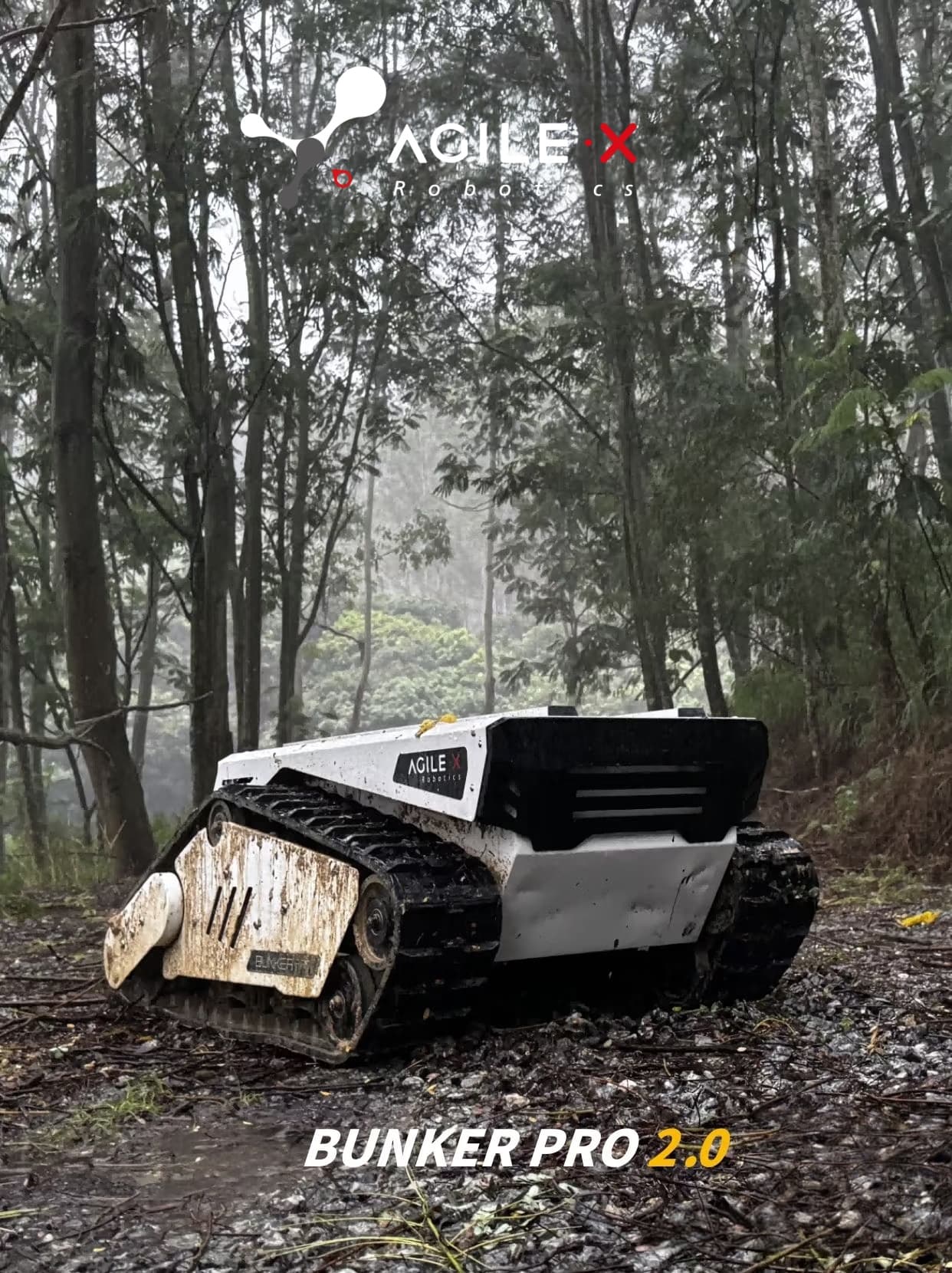
AgileX Robotics is excited to introduce the BUNKER PRO 2.0, a reinforced tracked chassis designed for demanding off-road conditions and versatile field robotics applications.
Key Features:
- Christie suspension system + Matilda four-wheel independent balancing suspension provide excellent terrain adaptability and ride stability.
- Easily crosses 30° slope terrain.
- Maximum unloaded range: 20 km; maximum loaded range: 15 km.
- Capable of crossing 40 cm trenches and clearing obstacles up to 180 mm in height.
- IP67-rated enclosure ensures robust protection against dust, water, and mud.
- Rated payload capacity: 120 kg, supporting a wide range of sensors, manipulators, and payloads.
- Maximum speed at full load: 1.5 m/s.
- Minimum turning radius: 67 cm.
- Developer-ready interfaces and ROS compatibility.
Intelligent Expansion, Empowering the Future
- Supports customizable advanced operation modes.
- Communication via CAN bus protocol.
- Open-source SDK and ROS packages for easy integration and development.
Typical Use Cases:
- Outdoor Inspection & Patrol
- Agricultural Transport
- Engineering & Construction Operations
- Specialized Robotics Applications
AgileX Robotics provides full ROS driver support and SDK documentation to accelerate your development process. We welcome collaboration opportunities and field testing partnerships with the community.
For detailed technical specifications or to discuss integration options, please contact us at sales@agilex.ai.
Learn more at https://global.agilex.ai/